I'm glad you're here. The only way to grow a revolution is by expanding our reach. And we cannot leave the reading revolution to chance. Our children need us.
Rehearsal Isn't Optional | Leadership in a Reading Revolution Newsletter
|
“For every complex problem there is an answer that is clear, simple, and wrong.”- H. L. Mencken Your work matters.Across the nation, states have passed legislation that requires teacher training and high quality instructional materials, often from a list. In last month’s newsletter, I highlighted the knowing-doing gap in response to this legislation. It’s clear that we need more than increased teacher knowledge and access to curriculum that aligns with the Science of Reading: Excel in Ed’s Early Literacy Policy recommends 18 principles. But even with these policies, implementation still stalls. The missing piece? Structured rehearsal within coaching. One of the Supports for Teachers & Policy Principles is Literacy/Reading Coaches. According to Excel in Ed’s Comprehensive How-to-Guide: “Literacy coaches are an important support mechanism for teachers in the classroom. School-based literacy coaches work closely with teachers to improve classroom practice and, ultimately, student reading achievement school-wide. As site-based personnel, literacy coaches provide the following supports: facilitate teacher training on evidence-based reading instruction and data-based decision making; demonstrate lessons; co-teach and/or observe teaching and provide immediate feedback. Literacy coaches serve as a stable resource for professional development throughout an elementary school, creating master teachers of reading to improve student reading achievement.” Yes, yes, and yes. This is an essential policy to put in place. Research supports job-embedded professional learning and coaching is an excellent (albeit expensive) way to provide it. However, a key component missing from the coaching support & implementation conversations: Rehearsal or Practice. Ask almost any instructional leader how they plan to support a teacher’s improvement and modeling is the answer. I hear it all the time working with coaches - they plan to model in the teacher’s classroom. The level of coaching experience or leadership doesn’t matter either; it is a consistent response from prospective coaches and experienced coaches. "Demonstrations in the classroom are usually the starting point of coaching, with the coach modeling or co-teaching prior to visiting the classroom." - National Center on Improving Literacy Situations that need modeling will be those in which the adult learner (teacher) needs to develop understanding and accuracy. To do it well, we must draw the learner’s attention to the specific moves and steps that we want them to emulate. Otherwise they may pay attention to the opposite of what we want them to learn. But what if the learner understands yet still isn’t translating it into practice? While modeling is a powerful practice, it isn’t a panacea; it’s one tool within a broader, responsive coaching approach to support implementation. And on its own, it often falls short. (Hence, the current knowing-doing gap.) Rather, we must build in the practice and rehearsal required for going beyond accuracy toward automaticity with the skill. Here’s what this looks like in practice. If the curriculum resource includes a specific blending routine and the teacher understands the steps, the teacher needs to rehearse the language they will use with students. The teacher may also need to anticipate student responses and how they will provide corrective feedback in the moment. Doing this type of practice alongside a coach BEFORE trying it with students works on two things: it reduces the teacher’s in-the-moment cognitive load for the lesson and encourages the routine of lesson rehearsal to support implementation. All performing professions require rehearsals. Doctors rehearse complicated surgeries. Broadway stars rehearse before opening night. Why is teaching treated differently? Teachers are asked to “perform” complicated teaching moves and routines, process tons of information and respond in the moment, and make millions of decisions each day. If your implementation is falling short, ask yourself when there is time for rehearsal. And if it doesn’t exist, make time for it. When teachers are implementing new knowledge, new routines, and new texts, they are no longer in the fluent or generalization learning phase. Knowing who our adult learners are is essential to matching the leadership or coaching support they need. The crosswalk below can help. If implementation matters in your work, rehearsal can't be optional. Leadership Moves
What Does This Mean for Me?To move from accuracy to automaticity, systems must intentionally build rehearsal and practice into coaching cycles. Providing teachers structured opportunities to practice routines, language, and responses with a coach reduces cognitive load and strengthens execution. This mirrors other performance-based professions where rehearsal is expected, not optional. Ultimately, successful implementation depends on how well leaders understand and support their adult learners. When leaders prioritize practice alongside knowledge and materials, they create the conditions for real instructional change. Recommended Resources
Related Newsletters:Where have we been?It's been a busy month of conferences, training with teachers, and literacy coaching!
| Where can we connect?Bold font shows events at which I'm presenting. The Reading League 10th Annual Conference | Learn more here
Would you like me to join an upcoming event as a speaker? Please reply to this email to inquire about how I can support you and your event. Sharing the Work of OthersAs we work to ensure every student in our schools succeeds, the biggest challenge isn't usually a lack of effort—it’s a lack of time and the right structures to make collaboration feel seamless. That’s why I wanted to share some incredible work being done by my friends at Jigsaw Learning. They have dedicated their work to helping schools move past the "lone sailor" model of teaching and into a Collaborative Response—a framework that ensures no teacher is left alone and every student has a team. They’ve curated a massive library of Free Resources specifically for school leaders, and I’ve hand-picked a few that I think will provide immediate value to your team:
Plus much more! Whether you are looking for a template to fix your staff meetings or an article to spark a conversation at your next PD day, these tools are designed to be actionable and impactful. Explore the Free Jigsaw Learning Resource Library Here I hope these resources help you and your staff find that "missing piece" in your collaborative efforts this year! P.S. If your meetings ever feel unfocused, definitely grab their FREE Guide For Leaders to Develop and Refine Team Norms. It’s a game-changer for shifting the culture of a room! Let's Work Together!At Linda Rhyne Consulting, we help schools and districts strengthen their instructional coaching and literacy systems so every educator thrives so they can impact student outcomes. From assessing your current approach, to designing strategic plans, to partnering with leaders for long-term implementation, we make sure your systems align with research, state standards, and your unique context. If you’re ready for cohesive, sustainable systems that work for your people, let’s talk. I'd love the chance to work with you/your team. Book a call today and let’s start designing the support your team deserves. 
Are you an individual or small team in need of on-demand support? Now, you can schedule a 90-minute session with me based on your needs at exactly the time you need it. The types of sessions are listed below.
For 90 minutes, we will meet and discuss your specific needs based on the information you provide when booking the appointment. The price is $250, paid upon booking the session (special pricing and booking link provided for current/former clients - check your email). Feel free to bring your team! Let's get your needs met at a time that serves you. 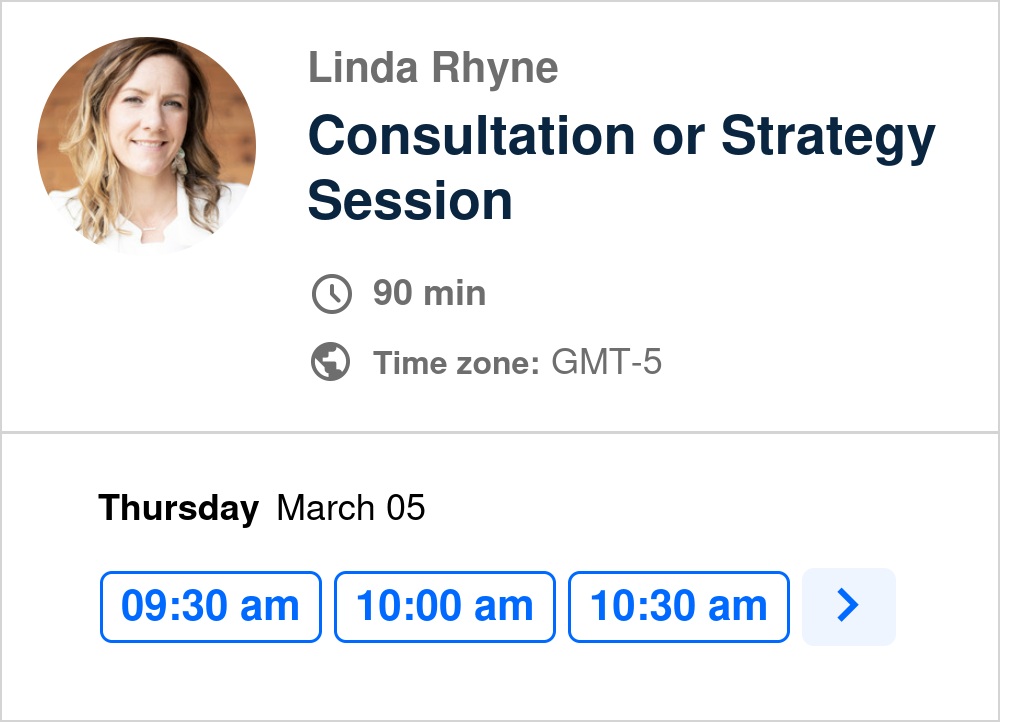
|


Hi! I'm Linda
I'm glad you're here. The only way to grow a revolution is by expanding our reach. And we cannot leave the reading revolution to chance. Our children need us.
“Focusing on these four foundational pieces [vocabulary, main ideas, summaries, and inferences] is essential for comprehension, even more so than practicing skills like author's purpose in isolation.” - Dr. Kay Wijekumar Before jumping into the newsletter a quick note from me: This was August's newsletter but it is being sent a few days "late." And I took the summer off when life took some turns. Please forgive the surprise summer break! Your work matters. Reading is an incredibly complex...
"Systems thinking is a discipline for seeing wholes. It is a framework for seeing interrelationships rather than things, for seeing 'patterns of change' rather than static snapshots." - Peter Senge Your work matters. Sometimes the problem with what you built is how it’s being used. Over the last few months, I’ve written about the gap between training and implementation and the importance of coaching in helping teachers move beyond the script. There is more to this; I’ve been describing...
"Not everything can go according to the plan." - Henning Mankell Your work matters. Last month, I wrote about something systems are facing right now: We are doing many things right… and it’s still not working. Let’s look at some reasons why. Because what I’m seeing over and over again in classrooms is not due to a lack of effort; it’s something more subtle and possibly more coachable. Teachers Are Doing the Lesson In many cases, teachers are compliant. They’re following the script. They’re...